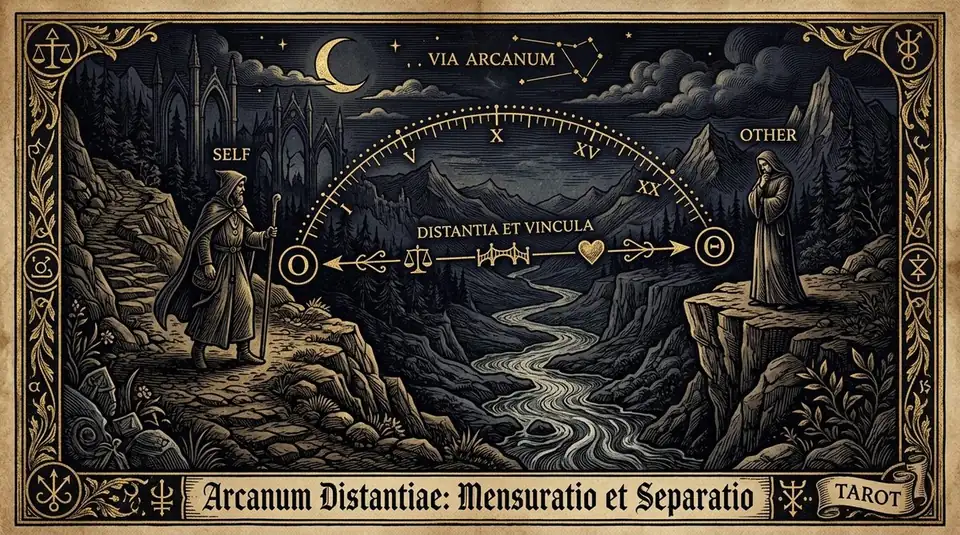
Every tarot spread is a silent theater, a staging ground where archetypes negotiate their power, their grief, and their desires. Most seekers approach the cards as a series of isolated riddles, looking up keywords in a glossary to translate the symbols. But the cards do not exist in isolation. When laid side-by-side, they establish a psychological geography. The physical space between the characters, the height at which one stands above another, and the barriers that partition them form a visual grammar. To master the art of interpretation, one must learn to read the distance between figures in tarot as an eloquent language of relationship, tension, and boundary.
This approach transitions the reader from memorizing static card meanings to observing dynamic relational structures. The silent spaces, the crowded margins, and the vast chasms between the figures are not accidental details. They are the visual scaffolding of human intimacy and estrangement. By understanding the tarot figures distance meaning, we can diagnose the true emotional layout of any situation. Whether analyzing a romance, a corporate hierarchy, or a deep internal conflict, the spatial configuration of the figures on the card table provides immediate, diagnostic clarity.
The Proxemics of Tarot: Space as Relationship Grammar
In the study of human behavior, proxemics is the analysis of how space is used to communicate intimacy, authority, and boundaries. When applied to the card designs, particularly those of the Rider-Waite-Smith tradition, we find a rich proxemic system. The physical space between people in tarot cards functions as a visual proxy for emotional closeness, psychological accessibility, and relational tension.
To read a spread without mapping this spacing is to read a sentence without punctuation. Gaze direction is the first step in this visual mapping—revealing where focus is directed. For a foundational exploration of sightlines, you may read our guide on how to read gaze direction in tarot cards. When gaze and distance are analyzed together, we see how the characters engage or withdraw. If you observe two figures looking toward each other, the spatial interval determines whether they are locked in a close embrace or shouting across a vast canyon. This relational mapping is discussed at length in Codex VIII: The Body Language of Tarot (available as the Codex VIII Kindle edition or Codex VIII paperback).
The Spectrum of Closeness: Physical Compression and Intimacy
Minimal distance between figures indicates physical compression. In harmonious cards like the Two of Cups or The Lovers, the figures stand within arm's reach. Their proximity speaks of vulnerability and trust; the tarot relationships visual distance is virtually non-existent, letting elemental energy flow. In the Ten of Cups and Ten of Pentacles, clustered figures indicate domestic stability and shared safety.
Conversely, proximity under difficult conditions suggests codependency. In The Devil, the figures stand close but are bound by chains. They are compressed within the beast's shadow, unable to establish individual space. Tight spacing here shows that the querent or partners are too close to separate the self from the other, preventing objective reflection.
The Void Between: Large Spatial Intervals and Separation
Large spatial intervals represent distance, time, and emotional insulation. When figures are separated by wide gaps, it points to alienation, estrangement, or a necessary phase of individuation.
In the Five of Pentacles, the figures walk side-by-side but do not touch or look at each other. The distance between them, though physically small, is psychologically immense; each is locked in separate suffering. In the Six of Swords, the gap between the ferryman and the huddled mother and child is a necessary buffer zone during a quiet transition.
The most dramatic exit occurs in the Eight of Cups, where a figure journeys away from stacked cups into distant mountains. The spatial gap represents emotional withdrawal, showing that the seeker must cross a great distance to find what is missing.
The Vertical Axis: Elevation, Hierarchy, and Power Dynamics
Spatial relationships are not merely horizontal. The vertical axis of a tarot card is a primary indicator of power, status, authority, and control. When one figure is positioned above another, it immediately establishes a hierarchy that must be analyzed in the context of the reading.
In The Devil, the beast sits perched high upon a stone pedestal, looking down at the small, naked figures chained below. This vertical distance emphasizes the psychological dominance of the archetype. The Devil does not negotiate on equal ground; he looms, casting his shadow downward. The same vertical dynamic is present in the Five of Swords, where the victorious figure stands in the foreground, holding the swords he has claimed, while the defeated figures walk away in the background, their heads bowed. In the Six of Wands, a rider sits elevated atop a white horse, representing public recognition and leadership. Yet, this vertical distance also indicates a degree of isolation: the leader cannot easily mingle with the crowd without losing the status that the horse provides.
When analyzing these vertical dynamics, the reader must ask: Is the elevation natural and earned, or is it a tool of oppression? If the card representing the querent is placed below an elevated figure in a spread, it suggests submissiveness, a feeling of being overpowered, or an acceptance of external authority. If the querent is the elevated figure, they must consider whether their position of authority is alienating them from those they are meant to lead.
Divided Worlds: Figures Partitioned by Landscape and Objects
Sometimes, figures are not merely separated by empty space; they are actively divided by physical objects, structures, or natural elements. These barriers serve as absolute psychological boundaries, indicating that a direct encounter is impossible until the landscape itself changes.
In the Two of Swords, the blindfolded figure sits on a stone bench, holding two heavy swords crossed over her chest. Behind her lies a body of water dotted with rocky islands. The water represents the deep, unconscious emotional world, while the rocky islands represent hard, unyielding thoughts. The figure's posture, combined with the barrier of her own crossed swords, creates an absolute block between her conscious mind and the watery world behind her. She has established a strict boundary to prevent her emotions from flooding her decision-making process.
In the Six of Swords, the six swords are driven vertically into the floor of the boat, standing like a fence between the passengers and the viewer. This metal partition creates a protective barrier, insulating the grieving mother and child from external intrusion. The swords represent the thoughts and rational decisions that shield them during their vulnerable transition. When such natural or man-made divides appear in a spread, they indicate that the forces on either side cannot easily communicate. These architectural and environmental divides are examined further in our study of the spatial dynamics of spreads, particularly when cards face, avoid, or cross one another; see our article on when tarot cards face each other in a spread.
Spanning the Spread: Distance Across Multiple Cards
While analyzing the spatial dynamics within a single card is crucial, the method reaches its full potential when applied across a complete layout. When we lay cards side-by-side, we must treat the entire spread as a continuous landscape. The distance between figures across different cards reveals the trajectory of the situation.
For example, if Card 1 (representing the Querent) contains a figure looking to the right, and Card 3 (representing the Goal) contains a figure looking to the left, they are facing each other. However, Card 2 sits between them. The figure in Card 2 represents the physical and psychological distance that must be navigated. If Card 2 is the Three of Swords, the distance is made of heartbreak and grief; if it is the Eight of Wands, the distance is covered quickly by rapid movement. If the figures in Card 1 and Card 3 look away from each other, the spatial interval is functionally infinite. No matter how close the cards lie on the table, the characters are walking in opposite directions, blind to each other's presence. This syntactic combination method is the core of Codex VII: The Tarot Combination Method (available on Codex VII Kindle and in Codex VII paperback).
Boundaries vs. Alienation: The Psychological Threshold
One of the most profound tasks of the tarot reader is to distinguish between healthy boundaries and painful alienation. Space is not inherently negative. In many situations, the creation of distance is the only way to preserve the integrity of the self. The cards reflect this distinction through the posture and environment of their figures.
A card like the Nine of Pentacles shows a woman standing in a lush, walled vineyard. The stone wall in the background represents a clear boundary. It keeps the chaos of the outer world at bay, allowing her to enjoy the fruits of her labor in peace. Her isolation is not lonely; it is sovereign, self-contained, and protected. It is a testament to the power of healthy boundaries. In contrast, the Four of Cups depicts a young man sitting under a tree, his arms crossed, staring down at three cups on the grass while a fourth is offered to him. The space around him is empty, representing his self-imposed isolation. His boundary has hardened into alienation. By closing his eyes and turning inward, he has cut himself off from the very opportunities and emotional nourishment he needs.
Practical Application: Spatial Dynamics in Tarot Readings
To put this method into practice, let us examine how spatial mapping applies to the three main fields of human inquiry: relationships, career, and inner conflict.
- Relationship Readings: Diagnosing the Drift. In relationship readings, the distance between the two cards representing the partners is the ultimate diagnostic metric. If they face each other but are separated by several cards, they have a shared focus but must resolve the intervening issues before they can connect. If they turn their backs, the relationship is experiencing a profound disconnect, even if the individual cards are traditionally "positive".
- Work and Career Readings: The Vertical Ascent. In career readings, look at the vertical alignment of the cards. Is the card representing the seeker positioned below the card representing their boss or their goal? If so, they are operating in a rigid hierarchy where they feel subordinate. The distance between their current card and the card of their ambition represents the steps, skills, or battles required to climb the ladder.
- Inner-Conflict Readings: The Fractured Self. When a client seeks clarity on an internal dilemma, the cards on the table represent different parts of their psyche. The vast distance between these two parts of the self suggests that they cannot find a common language. The reader's task is to identify what lies in the empty space between them, helping the client build a psychological bridge.
The Reader's Checklist for Distance-Mapping
Use this step-by-step checklist during your next reading to map the spatial geography of the spread. This method, rooted in visual evidence, ensures that your interpretations are grounded in what the cards actually show:
- Locate all figures: Scan the layout and identify every card that contains a human, animal, or personified figure. Note their locations.
- Measure the horizontal spacing: Are the figures compressed together, or are they separated by wide gaps? What does this interval say about their intimacy or alienation?
- Analyze the vertical axis: Are some figures elevated above others? Who holds the position of authority, and who is subordinate?
- Identify physical barriers: Are there rivers, walls, mountains, swords, or pedestals dividing the figures? What psychological boundaries do these structures represent?
- Evaluate the gaze across the distance: Do the figures look at each other across the space, or do they look away? Does their gaze bridge the distance, or does it emphasize their separation?
Frequently Asked Questions
What if a spread has no figures? How do I read the distance?
When a spread contains only object-based cards (like the Three of Swords, Ten of Wands, or Ace of Pentacles), we look at the distance and layout of the symbols themselves. Are the swords clustered tightly together, piercing a single heart, or are the wands scattered across the landscape? The spacing of the elemental objects within the cards replaces the human figures, indicating whether the forces are concentrated and high-pressure, or dispersed and uncoordinated.
How does distance affect the timing of a reading?
Spatial distance often translates directly into temporal distance. If a card representing an outcome is positioned far to the right of the client's card, separated by several intervening cards, the event will take longer to manifest. The seeker must work through the lessons and challenges of the middle cards before they can reach the outcome. If the cards are side-by-side and facing each other, the timing is immediate; the encounter is happening now.
Can animal figures be used to map distance and intimacy?
Yes. Animals in tarot represent our instinctual, somatic, and unconscious drives. The distance between a human figure and an animal figure (such as the lion in Strength or the dog in The Fool) shows how connected the client is to their instincts. If the human and animal are close and touching, it indicates somatic integration. If they are separated or if the human is ignoring the animal, it suggests that the client is ignoring their bodily warning signs or gut feelings.
What does it mean when a figure looks out of the card at the reader?
A figure looking directly out of the card (like the Queen of Swords or the central figure in the Two of Pentacles) is breaking the fourth wall. They are engaging the consciousness of the viewer directly. In terms of distance, this figure is bypassing the other cards in the spread and establishing a line of sight with the client themselves. This card represents a call to self-awareness, urging the client to take an objective view of their situation.
Continue the Method
To master the visual language of tarot, including spatial mapping, gaze direction, and spread-level dynamics, explore these key volumes in the Tarot Codex series: