To stand before a tarot spread is to confront a silent, fragmented lexicon. Too often, the aspiring reader approaches the cards with a glossary of memorized keywords, treating each illustration as an isolated island of meaning. They retrieve a definition for the first card, a separate definition for the second, and a third for the last, laying them out like a row of disjointed terms. Yet, a collection of words is not a language. To truly understand the oracle, we must learn how to read tarot cards together, synthesizing their independent voices into a single, cohesive, and grammatical statement.
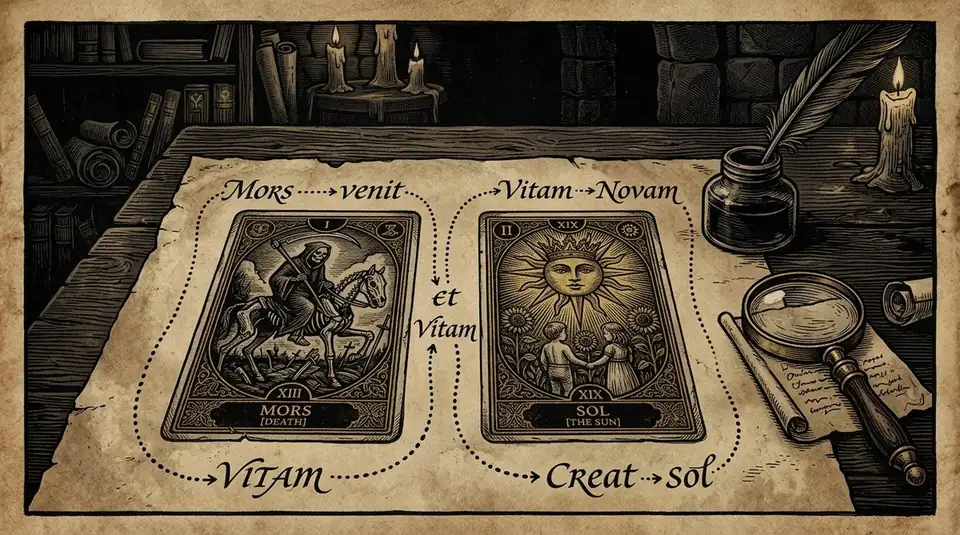
This process of synthesis is the hermeneutic core of reading. It is the transition from lexical isolation to relational grammar. When we learn to turn tarot spread into a sentence, we do not merely stack keywords; we build a living bridge between the archetypes. The cards cease to be static nouns and become actors, pressures, directions, and obstacles. This guide presents a scholarly and systematic method to transform any tarot spread into a single, elegant tarot interpretation sentence, establishing a clear line of meaning that resolves the reader's confusion and honors the visual reality of the layout.
The Lexical Trap: Why Keyword Stacking Fails
The primary barrier to fluency in tarot is the temptation to rely on isolated definitions. Many books instruct readers to memorize seventy-eight meanings, leading to what we may call "keyword stacking." If the Three of Swords appears next to the Two of Pentacles, a stacker might declare: "You are experiencing heartbreak, and also you are balancing two things." This is not an interpretation; it is a list of ingredients without a recipe. It leaves the querent with the labor of integration, forcing them to guess how grief and balance interact.
In the Codex method, we treat the cards as visual and structural elements that actively modify one another. A symbol does not exist in a vacuum; it acts upon its neighbors, shifts its weight depending on the question, and yields to the overall weather of the spread. To move past this fragmentation, we must ask how to combine tarot card meanings through a syntax that reflects the dynamics of human experience. For a foundational exploration of these relational mechanics, you should consult our guide on how to read card combinations.
The Five-Part Sentence Formula
To weave multiple cards into a single, coherent statement, we can employ a grammatical formula. This formula acts as a skeletal structure, allowing us to assign specific narrative functions to the cards based on their symbols, elements, and positions. The formula consists of five distinct components: the Subject, the Pressure, the Movement, the Obstacle, and the Advice or Pattern. By mapping these five parts, the reader can transform any layout into a structured paragraph or a single complex sentence.
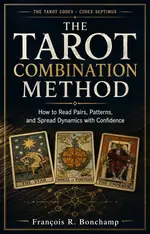
This systemic synthesis of cards is detailed in Codex VII: The Tarot Combination Method (available as Codex VII Kindle or Codex VII paperback). Let us define each component of the formula:
1. The Subject (Noun or Actor)
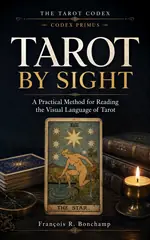
The Subject is the focal point of the sentence. It represents the querent, their core agency, or the primary force operating at the center of the query. In the cards, the Subject is usually represented by a prominent figure (especially a Court Card or a Major Arcana archetype) or the card that carries the most elemental weight in the "present" position of the spread. To observe the cards clearly before constructing your sentence, reference the visual observation techniques in Codex I: Tarot by Sight (read the Codex I Kindle or order the Codex I paperback). The Subject answers the question: Who or what is driving this situation?
2. The Pressure (Verb or Friction)
The Pressure represents the internal or external tension acting upon the Subject. It is the verb of the sentence, describing the challenge, the demand, or the energetic field that the Subject must navigate. This is often represented by Swords (mental stress or conflict), Wands (external demands or passion), or low-numbered cards that indicate sudden disturbance. The Pressure answers: What force is pushing, limiting, or destabilizing the Subject?
3. The Movement (Vector and Direction)
The Movement describes the vector of the cards—the direction in which the energy is flowing, the speed of transition, and the orientation of the figures' gazes. If the figures look toward the future (right) or retreat toward the past (left), this spatial movement dictates the timeline of the sentence. The Movement answers: Where is this situation trying to go, and how fast is it moving?
4. The Obstacle (Boundary or Friction)
The Obstacle is the point of resistance in the spread. It is the card that stands in the way of the Subject's movement, representing a limit, a boundary, or a lesson that must be integrated before the sentence can resolve. This is often shown by cards depicting walls, closed gates, blindfolds, or reversed cards that indicate blocked energy. The Obstacle answers: What is resisting this flow, and what price must be paid to pass?
5. The Advice or Pattern (Synthesis or Resolution)
The Advice or Pattern is the terminal clause of the sentence. It is the resolution of the grammatical tension, showing where the energy must land or what attitude the Subject must adopt to synthesize the opposing forces. This is usually determined by the final card in the spread or the overall elemental balance. The Advice answers: How does this sentence resolve, and what is the integrated path forward?
Walkthroughs: Building Sentences on the Table
To see this syntactic chemistry in practice, let us examine two specific layouts: a two-card combination and a three-card narrative line.
The Two-Card Synthesis: The Fool and the Ten of Wands
Imagine a client asking about starting a new creative project. We draw two cards: The Fool followed by the Ten of Wands.
If we stack keywords, we get: "You are starting a new journey, and also you are carrying a heavy burden." This is flat and unhelpful. Instead, let us apply our sentence formula:
- Subject: The Fool (the unburdened seeker, representing the client's eager leap).
- Pressure/Obstacle: The Ten of Wands (a massive, physical weight of responsibility and fatigue).
- Movement: The Fool is stepping forward (right), charging directly into the wall of wands.
By fusing these elements, we construct a singular, dynamic sentence: "The unburdened seeker steps eagerly into the creative void, only to find the path immediately obstructed by a crushing weight of accumulated obligations."
This sentence immediately reveals the therapeutic tension of the reading: the client's desire for absolute freedom (The Fool) is in direct conflict with their existing commitments (Ten of Wands). The advice is clear within the grammar: the Fool must set down the wands before the leap can be made safely.
The Three-Card Synthesis: Three of Cups, Queen of Swords, and Ten of Wands
Let us look at a more complex, three-card layout representing a professional partnership: Three of Cups (Card 1, left), Queen of Swords (Card 2, center), and Ten of Wands (Card 3, right).
A keyword reader might say: "You have friendship and celebration, but then a sharp woman is there, and you are working too hard." Let us rebuild this using our relational syntax:
- Subject: The Queen of Swords in the center card represents the principal actor—a figure of intellectual clarity, boundary-setting, and sharp discernment.
- Pressure: She stands between the celebration of the Three of Cups and the exhaustion of the Ten of Wands.
- Movement/Direction: The Queen of Swords looks to the left, toward the Three of Cups, turning her back on the Ten of Wands.
- Synthesis: The Queen's gaze connects her directly to the celebration. She is looking back at the initial joy of the partnership, evaluating it with a critical eye, while refusing to carry the heavy, unhelpful labor represented by the Ten of Wands on her right.
We combine these insights into one cohesive sentence: "While a collaborative partnership begins in joyful celebration, the analytical mind must establish firm, sharp boundaries to prevent collaborative joy from degenerating into an exhausting, individual burden."
This sentence does not merely list the cards; it explains the relation. The Queen of Swords is the active agent who uses her intellect (Swords) to protect the shared cup of relationship (Cups) from the fatigue of over-work (Wands).
Syntactic Modifiers: How to Adjust the Sentence
Once you have the basic structure of your sentence, you must adjust its tone, speed, and weight by reading the subtle visual modifiers present in the cards. In the system of The Tarot Codex, we look at four primary modifiers:
1. Suits as Elemental Verbs
The suit of the cards dictates the verbs and the atmosphere of your sentence. Each element carries a distinct kinetic quality:
- Wands (Fire): Verbs of action, combustion, acceleration, and struggle. The sentence moves fast: "charges," "combusts," "strives," "ignites."
- Cups (Water): Verbs of absorption, feeling, memory, and flow. The sentence moves inward: "absorbs," "grieves," "longs," "dissolves."
- Swords (Air): Verbs of cutting, division, analysis, and boundary-setting. The sentence is sharp and cold: "dissects," "severs," "clarifies," "confronts."
- Pentacles (Earth): Verbs of building, holding, waiting, and enduring. The sentence is slow and heavy: "builds," "anchors," "pays," "consolidates."
2. Numbers as Developmental Tenses
The numbers of the Minor Arcana indicate the stage of development, which modifies the tense and maturity of the sentence. Aces represent embryonic potentials ("a seed of thought begins to stir"), while Tens represent finality, excess, and consequence ("reaching the absolute limit of structure"). Fives introduce a sudden, destabilizing clause ("although an unexpected crisis fractures the peace"), and Nines show solitary integration ("having gathered the fruits of isolation").
3. Direction and Gaze as Connective Sightlines
Where the figures look is where the sentence's grammar connects. If two figures face each other, the sentence is a dialogue or confrontation. If they turn their backs, the sentence contains a blind spot or a refusal to communicate. If a figure looks out of the card toward the viewer, the sentence addresses the client's conscious awareness directly. (For a deep study of this visual grammar, read how to read gaze direction in tarot cards).
4. Spread Positions as Temporal Clauses
Do not treat spread positions as rigid boxes. Instead, read them as temporal or conditional clauses. A "Past" position is a subordinate clause starting with "Although you have historically built..."; the "Present" is the main active clause; and the "Future" or "Outcome" is the conditional clause indicating where the current trajectory lands: "...this path ultimately leads to." By reading the positions as grammar, the spread flows as a single narrative arc.
Four Common Interpretive Mistakes to Avoid
To master this method, the reader must unlearn several habits common in modern, commercial tarot. Watch for these four pitfalls:
1. Keyword Stacking
As discussed, listing keywords without connecting them is the most common failure. Always ask: How does Card A modify, change, or challenge Card B? If you cannot write a single sentence that contains both concepts naturally, you have not yet found the connection.
2. Ignoring the Question
A sentence must have a context. The query is the anchor of the sentence's subject. If the client asks about a legal dispute, your sentence cannot be about romantic fulfillment, even if the Lovers card appears. The Lovers in a legal dispute must be read syntactically—as a choice of alignment, a contract, or a partnership that carries legal weight.
3. Over-Explaining
A strong sentence is precise. When readers lack confidence, they often talk in circles, piling up explanations and details until the core message is lost in noise. Trust the simplicity of the formula: Subject, Pressure, Movement, Obstacle, Resolution. Keep it brief, and let the silence after the sentence do its work.
4. Forcing Positivity
Many modern guides insist on finding a "positive spin" for every card, which destroys the grammatical tension of the reading. If a card like the Three of Swords or the Tower appears, it represents friction, disruption, or pain. The sentence needs this friction to be authentic. Forcing a positive verb onto a painful card is like writing a sentence with no conflict; it becomes a sterile platitude that offers the client no real insight.
Frequently Asked Questions
What if a card has no figures? How do I find the Subject?
When a card has no figures (such as the Three of Wands or the Nine of Swords), the Subject is the environment or the mental state itself. In these cases, the environment acts as a stage that exerts pressure on the querent. You can phrase it as: "A landscape of quiet waiting..." or "A chamber of sleepless worry..." which then modifies the actions of the surrounding cards.
What if the cards in the spread contradict each other?
Contradiction is the heart of human complexity. In grammar, we resolve contradiction using conditional clauses (e.g., "although," "but," "yet"). If you draw the Ten of Cups (joy) next to the Five of Swords (conflict), your sentence should capture this tension: "Although a deep emotional harmony exists, it is currently threatened by a sharp, prideful argument over boundaries." Do not try to erase the conflict; write it into the sentence.
How do reversed cards fit into the sentence formula?
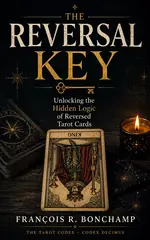
In the Codex system, a reversed card is not read as the automatic opposite. Instead, it indicates a shift in the flow of energy: it is blocked, delayed, internalized, or excessive. In your sentence, a reversal modifies the verb. An upright card might read "expresses," while a reversed card reads "struggles to express," "hides," or "exaggerates." For the complete method on reversals, see Codex X: The Reversal Key (available on Codex X Kindle and Codex X paperback), or see our dedicated guide on how reversed cards change meaning.
Can a sentence be too long or complex?
Yes. The goal of this method is clarity. If your sentence contains multiple sub-clauses and takes three breaths to read, it is too complex. Break it into two related sentences, but ensure they remain connected by a clear narrative thread: "You stand at a threshold of change. However, you are holding onto an old security that prevents you from crossing."
Continue the Method
To master the relational grammar of tarot, including combinations, visual sightlines, and structural interpretation, explore these essential volumes of The Tarot Codex series: