
symbolic analysis
Why Tarot Is a Symbolic Language
Tarot becomes clearer when it is approached as a visual language of scene, symbol, number, element, gesture, and pattern.
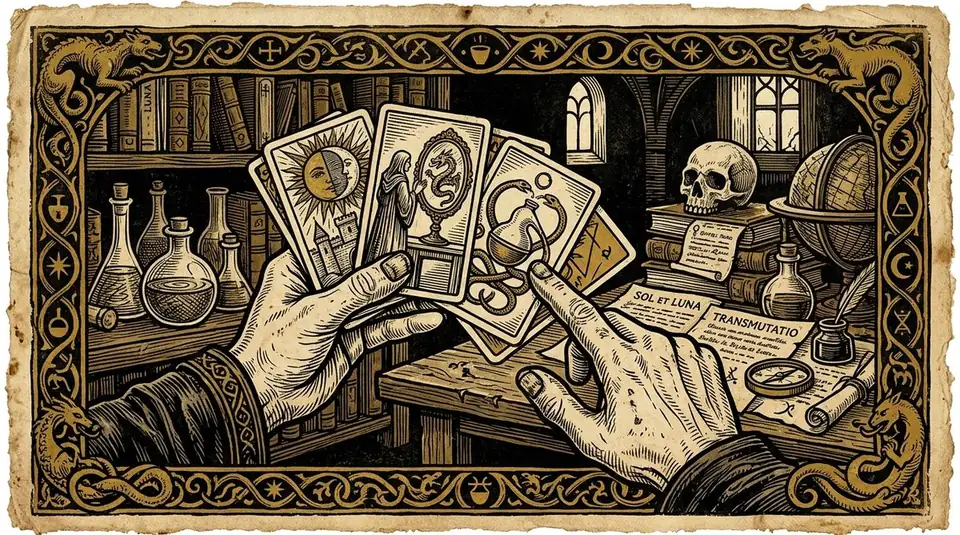
Tarot begins before the keyword
A tarot card is not merely a label waiting to be remembered. It is a small visual argument. Figure, landscape, object, direction, weather, number, suit, and posture all participate in meaning. When the reader starts with observation, the card becomes less arbitrary and more articulate.
The image gives intuition a floor
Intuition is strongest when it has something to answer to. The visible card resists projection: a closed gate, lowered gaze, repeated sword, or distant mountain can correct a reading that has become too vague. Structure does not kill intuition; it gives it discipline.
Meaning is relational
A symbol changes according to where it appears, who touches it, what surrounds it, and what question has been asked. Tarot fluency grows when the reader stops asking for one fixed meaning and begins asking what each detail is doing in this particular scene.
The Tarot Codex Method
Deepen Your Mastery in the Codices
This article introduces foundational visual principles. To study these concepts in full depth, explore the corresponding volumes of The Tarot Codex by François R. Bonchamp:
The foundation of the series: a practical method for reading the card as an image before reducing it to a keyword.
A visual-symbolic guide to animals, plants, landscapes, clothing, architecture, tools, and objects in tarot.
A guide to gaze, hands, faces, posture, movement, distance, and the human behavior visible inside the cards.