
visual interpretation
Body Language in Tarot
Hands, faces, posture, gaze, and movement reveal meaning before a single keyword is applied.
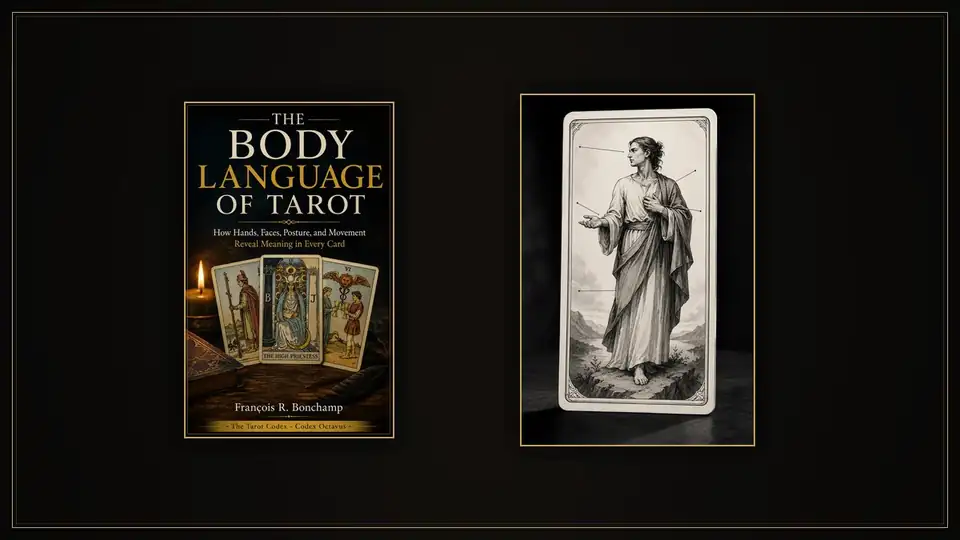
Gaze directs attention
Where a figure looks can reveal desire, avoidance, memory, fear, focus, or refusal. In a spread, lines of sight can connect cards into a visual conversation.
Hands show intention
A hand holding close, offering outward, pointing, blessing, guarding, or dropping an object changes the emotional logic of the card. Hands often reveal what the figure is doing with the card’s energy.
Posture gives the tone
A seated figure can show grounded authority or rigid control. A kneeling figure can show reverence, service, defeat, or exhaustion. The body makes abstract meanings human.
The Tarot Codex Method
Deepen Your Mastery in the Codices
This article introduces foundational visual principles. To study these concepts in full depth, explore the corresponding volumes of The Tarot Codex by François R. Bonchamp:
A guide to gaze, hands, faces, posture, movement, distance, and the human behavior visible inside the cards.
The foundation of the series: a practical method for reading the card as an image before reducing it to a keyword.
A visual-symbolic guide to animals, plants, landscapes, clothing, architecture, tools, and objects in tarot.